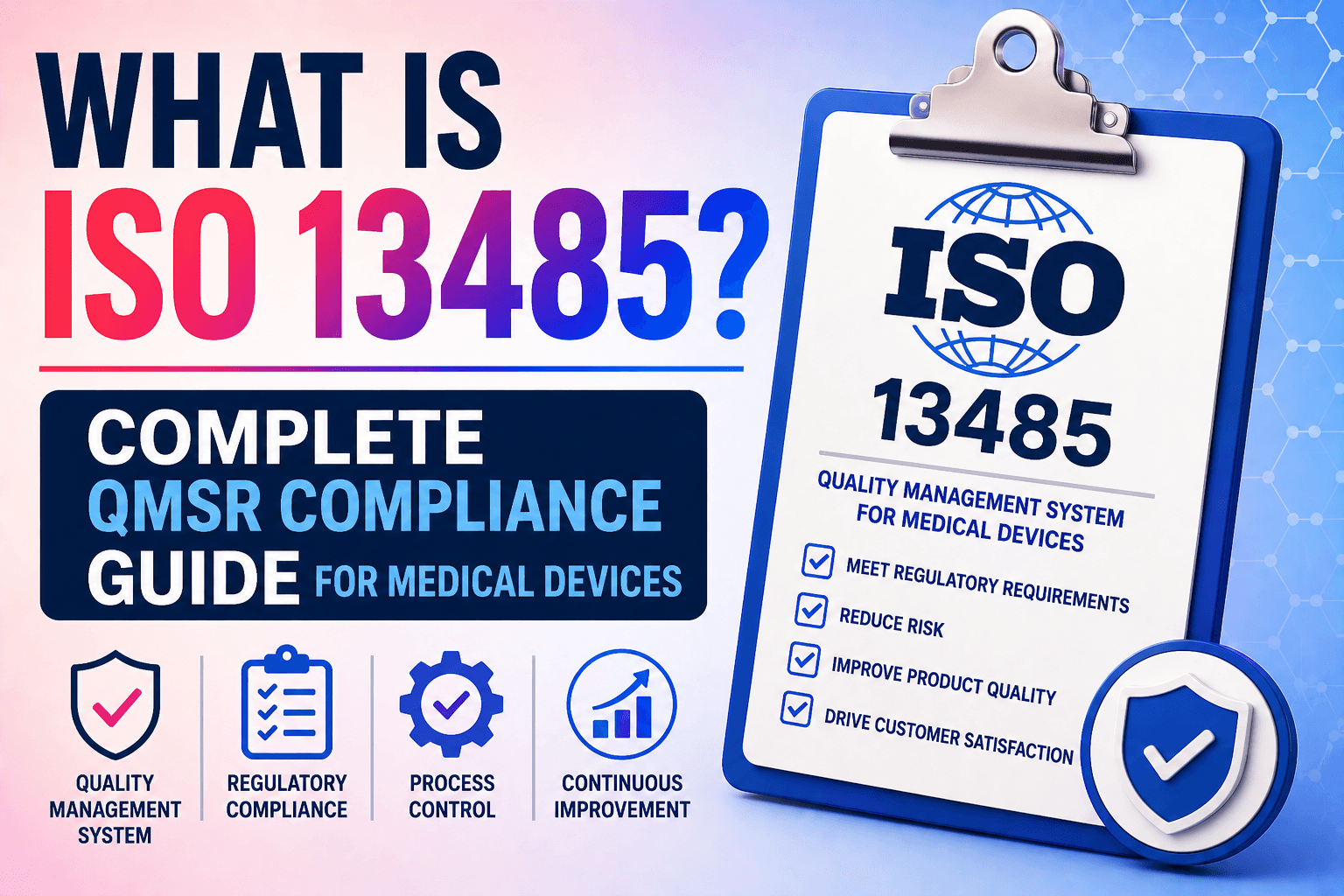
ISO 13485 is the international QMS standard for medical devices. In the U.S., FDA’s QMSR takes effect Feb 2, 2026, incorporating ISO 13485:2016 by reference plus FDA-specific additions (e.g., definitions/record provisions), replacing the old QSR. You must comply with QMSR; ISO certification isn’t required (and doesn’t replace FDA inspections).
This guide covers ISO 13485 requirements, QMSR transition planning, and implementation strategies for the 2026 compliance deadline.
ISO 13485 vs. ISO 9001: Why Medical Devices Need a Different Standard
Medical Device-Specific Requirements
ISO 13485 addresses unique medical device needs that ISO 9001 simply can't handle.
Regulatory compliance focus rather than customer satisfaction emphasis. Risk management integration throughout all processes. Validation requirements for processes affecting product safety.
Detailed documentation supporting regulatory submissions.
Key Differences from ISO 9001
Customer Focus vs. Regulatory Focus
ISO 9001 emphasizes customer satisfaction and continuous improvement. ISO 13485 prioritizes regulatory compliance and patient safety over customer preferences.
Improvement Requirements
ISO 9001 mandates continuous improvement. ISO 13485 requires improvement only when necessary for regulatory compliance or patient safety.
Process Validation
ISO 13485 specifically requires validation for processes that cannot be verified through subsequent inspection or testing. This is critical for medical device manufacturing.
Documentation Depth
Medical device regulations demand extensive documentation for traceability, risk management, and post-market surveillance. This exceeds general ISO 9001 requirements.
The 2026 QMSR Transition: What Changes February 2nd
FDA's RegulatoryHarmonization
Why FDA Adopted ISO 13485: The current Quality System Regulation (QSR) hasn't been significantly updated since 1996. Medical device technology and global regulatory expectations have evolved dramatically.
Global Harmonization Benefits:
- Reduced compliance burden for companies selling internationally.
- Streamlined audits through Medical Device Single Audit Program (MDSAP).
- Updated requirements reflecting current industry best practices.
QMSR Implementation Timeline
Until February 2, 2026: FDA inspections continue under current QSR requirements. Companies can transition voluntarily but aren't required to comply with QMSR.
February 2, 2026 Forward: All FDA inspections will be conducted against QMSR requirements incorporating ISO 13485:2016.
New Inspection Approach: FDA will develop new inspection procedures aligned with QMSR requirements. Specific details haven't been announced.
What "Incorporation by Reference" Means
Direct Legal Requirement: ISO 13485:2016 becomes part of U.S. federal regulation. Companies must comply with ISO 13485 requirements as if they were written directly in 21 CFR 820.
Version Lock: QMSR incorporates ISO 13485:2016 specifically. Future ISO 13485 revisions won't automatically apply unless FDA initiates new rulemaking.
Additional FDA Requirements: QMSR adds specific requirements beyond ISO 13485 for labeling, packaging, UDI compliance, and certain documentation.
Core ISO 13485 Requirements: What You Must Implement
Quality Management System Framework
Documentation Requirements:
- Quality manual defining QMS scope and processes
- Documented procedures for required activities
- Work instructions for critical operations
- Forms and records supporting all activities
Management Responsibility: Top management must demonstrate commitment through resource allocation, policy establishment, and regular management review.
Risk-Based Approach: Risk considerations must be integrated throughout the QMS. From design and development through post-market surveillance.
Design and Development Controls
Planning Requirements:
- Development phases with defined deliverables.
- Review points with appropriate personnel.
- Verification and validation activities.
- Design transfer procedures.
Documentation (Design and Development Files): Replace current DHF (Design History File) concept with ISO 13485's integrated documentation approach throughout development lifecycle.
Change Control: Systematic evaluation of design changes for impact on safety, effectiveness, and regulatory compliance.
Manufacturing and Service Controls
Production Planning:
- Process validation for processes that cannot be fully verified.
- Equipment qualification and maintenance.
- Environmental controls appropriate for product requirements.
- Personnel training and competency verification.
Product Identification and Traceability:
- Unique device identification (UDI) compliance.
- Lot/batch traceability throughout distribution.
- Component traceability for critical materials.
Measurement and Improvement
Internal Audits: Regular systematic audits to verify QMS effectiveness and regulatory compliance.
Management Review: Periodic top management evaluation of QMS performance and improvement opportunities.
Corrective and Preventive Action (CAPA): Systematic approach to identifying, investigating, and correcting quality problems and preventing recurrence.
QMSR-Specific Requirements: Beyond Standard ISO 13485
Additional FDA Requirements
Labeling and Packaging Controls (§820.45): New QMSR section requiring detailed procedures for labeling and packaging operations. Including integrity verification and storage controls.
UDI Integration: Specific requirements for UDI compliance integrated with device identification and traceability systems.
Complaint Handling Enhancements: Additional requirements for complaint documentation and investigation procedures.
Terminology Changes
New Terms Replace FDA-Specific Language:
- Medical Device File (MDF) replaces Device Master Record (DMR) and Device History Record (DHR).
- Design and Development Files replace Design History File (DHF).
- Safety and performance replaces "safety and effectiveness."
Definition Priorities: When ISO 13485 and FDA definitions conflict, FDA definitions take precedence for terms like "device" and "labeling."
Records and Documentation
Inspection Access Changes: QMSR removes current QSR exception allowing companies to withhold management review records, internal audit reports, and supplier audit reports from FDA inspectors.
Enhanced Documentation: Additional recordkeeping requirements for complaint handling, servicing activities, and UDI compliance.
Implementation Strategy: Your 2026 Readiness Plan
Current State Assessment (Immediate Action)
Gap Analysis Options:
If You Have No ISO 13485: Conduct comprehensive gap analysis between current QMS and ISO 13485:2016 requirements plus QMSR additions.
If You Have ISO 13485 Certification: Focus gap analysis on QMSR-specific additions like labeling controls, UDI integration, and documentation access requirements.
If You Have MDSAP Certification: Your system likely meets most QMSR requirements. But verify compliance with FDA-specific additions.
Implementation Timeline
Phase 1: Planning and Assessment (Now - Q2 2025)
- Complete gap analysis against QMSR requirements.
- Develop implementation project plan with resource allocation.
- Begin staff training on ISO 13485 principles and requirements.
Phase 2: System Development (Q2 - Q4 2025)
- Update/develop QMS documentation to meet QMSR requirements.
- Implement new processes for labeling, packaging, and UDI controls.
- Conduct pilot implementations of critical processes.
Phase 3: Final Preparation (Q4 2025 - February 2026)
- Complete internal audits against QMSR requirements.
- Address any non-conformities through CAPA process.
- Train all personnel on updated procedures and requirements.
Critical Implementation Areas
Quality Manual Update: Revise quality manual to reference ISO 13485:2016 requirements and include QMSR-specific additions.
Procedure Documentation: Update all QMS procedures to align with ISO 13485 structure and terminology while maintaining QMSR compliance.
Training Program: Comprehensive training on ISO 13485 principles, risk-based thinking, and QMSR-specific requirements.
Internal Audit Program: Develop audit procedures and checklists aligned with QMSR requirements for post-2026 compliance verification.
Risk Management Integration: The ISO 13485 Foundation
Risk-Based Approach Throughout QMS
Planning and Design: Risk considerations must inform all planning decisions. From product development through manufacturing and distribution.
Process Controls: Manufacturing processes must be validated when risks cannot be adequately controlled through inspection and testing.
Supplier Management: Supplier selection and monitoring must consider risks to product safety and regulatory compliance.
ISO 14971 Connection
Risk Management Standard: While not directly incorporated, ISO 13485 references ISO 14971 principles for medical device risk management.
QMSR Considerations: Risk management processes must comply with applicable FDA requirements. Including risk analysis documentation and post-market risk evaluation.
Practical Implementation: Integrate risk management activities throughout QMS rather than treating as separate process.
Post-Market Surveillance and Improvement
ISO 13485 Post-Market Requirements
- Surveillance System: Systematic monitoring of device performance and safety in clinical use.
- Feedback Integration: Customer complaints, adverse events, and performance data must inform continuous monitoring and improvement decisions.
- Regulatory Reporting: Post-market surveillance must support regulatory reporting requirements including MDR, field safety notices, and recall activities.
CAPA System Enhancement
Problem Identification: Multiple sources including complaints, audits, data analysis, and post-market surveillance.
Investigation Process: Systematic root cause analysis with appropriate depth based on risk and impact.
Implementation and Verification: Documented implementation of corrective and preventive actions with effectiveness verification.
ISO 13485: Your Foundation for Global Medical Device Success
ISO 13485 represents more than regulatory compliance. It's the quality management foundation that enables medical device companies to succeed in global markets while ensuring patient safety and product effectiveness.
Success requires starting now. With less than 18 months until the compliance deadline, companies need systematic implementation plans that address both ISO 13485 requirements and QMSR-specific additions.
Your quality management system determines whether your medical devices reach patients safely and efficiently. Make ISO 13485 and QMSR compliance your competitive advantage.
The Fastest Path to Market
No more guesswork. Move from research to a defendable FDA strategy, faster. Backed by FDA sources. Teams report 12 hours saved weekly.
Frequently Asked Questions
Do I need ISO 13485 certification for QMSR compliance?
No. FDA does not require certification and will not rely on certification for compliance determinations. However, certification provides business benefits for international markets and customer requirements.
What happens if I'm not ready by February 2, 2026?
FDA will begin enforcing QMSR requirements on February 2, 2026. Non-compliance could result in FDA enforcement actions including warning letters, consent decrees, or product recalls.
Can I start transitioning to QMSR before the deadline?
Yes, voluntary early adoption is permitted. However, FDA inspections will continue under QSR until February 2026, so you must maintain compliance with current requirements.
How will FDA inspections change under QMSR?
FDA will develop new inspection procedures aligned with QMSR requirements. Specific details haven't been announced, but inspections will focus on ISO 13485 compliance plus QMSR additions.
What if ISO 13485 is updated before 2026?
QMSR incorporates ISO 13485:2016 specifically. Future ISO 13485 revisions won't automatically apply unless FDA initiates new rulemaking to update QMSR.